My Stripe dashboard showed a $750 monthly charge from Zapier. I had built one simple AI agent — a lead researcher that scrapes LinkedIn, enriches contacts, drafts emails. However, the same agent, rebuilt on n8n over a quiet Saturday in my home office, runs for $50. Fifteen times the price.
Here’s the truth: n8n vs Zapier isn’t a features debate — it’s a pricing-model war, and AI agents are the frontline. Below I’ll show when each wins and the moment I almost switched back at 3AM.
n8n wins for AI agent building — native LangChain nodes, self-hosting, and per-execution pricing that’s 10x cheaper at scale. Zapier wins for non-technical teams — 8,000+ integrations and zero-code setup. After 48 hours on both, n8n cost $50/month for 10,000 executions while Zapier hit $750+ for the same workload. Meanwhile, Zapier had my agent running in 20 minutes; n8n took 3 hours.
| Factor | n8n (Winner for AI Agents) | Zapier (Winner for No-Code) |
|---|---|---|
| Starting Price | Free (self-hosted) | $29.99/mo Professional |
| 10K Executions/Month | $50 | $750+ (Company tier) |
| AI Agents | 70+ LangChain nodes | Zapier Agents (native) |
| Integrations | ~1,500 nodes | 8,000+ |
| Self-Hosting | Yes (Docker) | No (cloud-only) |
| Setup Time | 3 hours | 20 minutes |
n8n vs Zapier: The 60-Second Answer
Pick n8n if your team codes. Pick Zapier if they don’t. Honestly, that’s the whole decision tree. Everything else is noise next to this one factor.
n8n is a fair-code workflow platform with 70+ LangChain nodes and unlimited self-hosting for developers building AI agents without per-task fees.
Zapier is a cloud-only automation platform with 8,000+ integrations and an AI Copilot that lets non-technical teams build workflows in plain English.
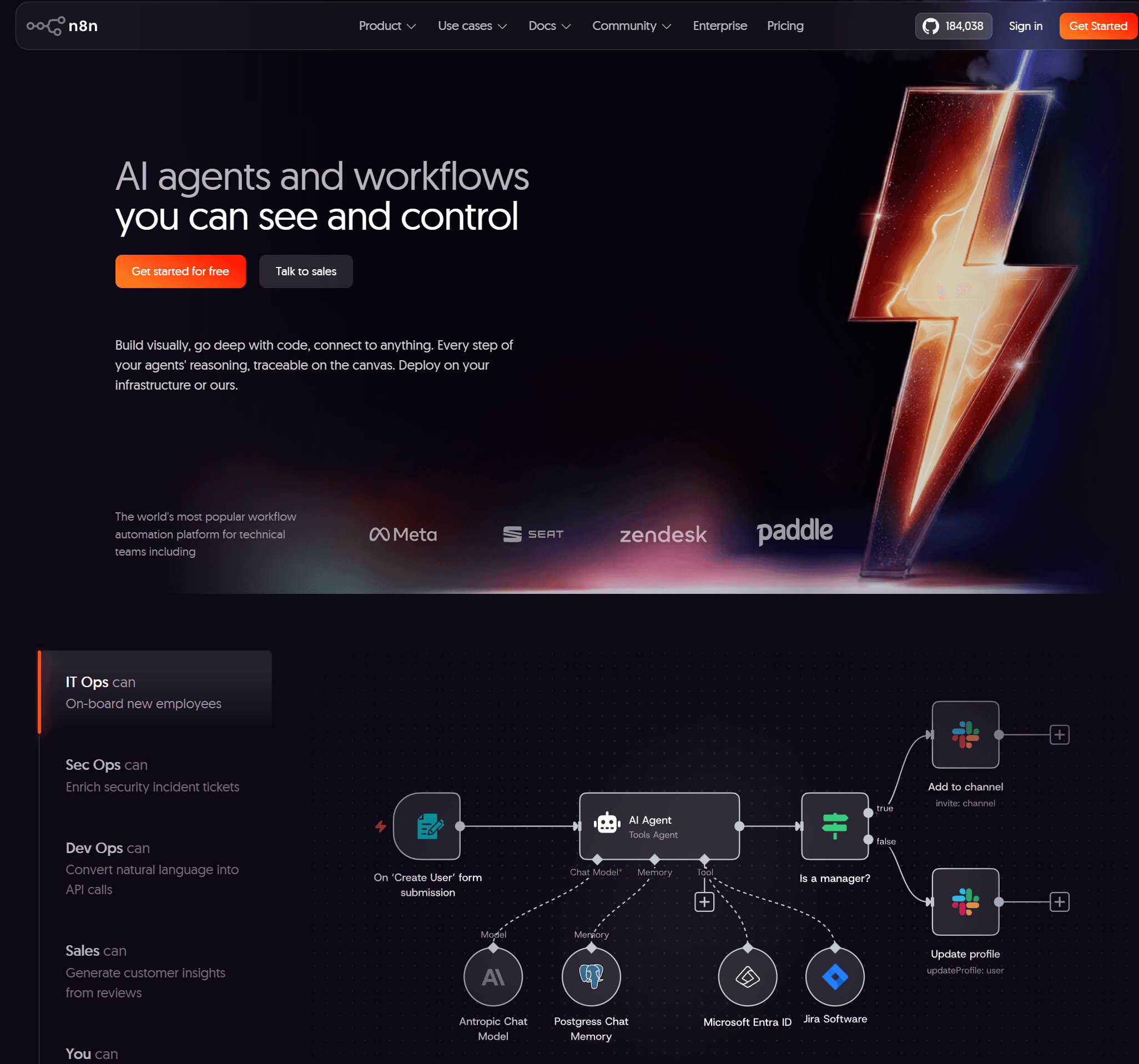
Over 48 hours I tested one real job: an agent that scrapes LinkedIn, enriches via Clearbit, scores against our ICP, drafts emails via Claude. Both finished. However, price and build path differed wildly.
My answer to n8n vs Zapier is always the same: it depends on who’s maintaining the thing six months later. Next, the ONE decision point that makes this trivial.
Does Your Team Write Code? That’s the Only Question
Stop comparing features. The only question that matters is whether your team writes code. If yes, n8n gives you unlimited self-hosted executions and LangChain-native agent primitives. If no, Zapier’s 8,000 integrations plus its AI Copilot let you describe a workflow in English and get 80% of it auto-built.
Actually, tool choice is about maintenance burden three months later. An n8n workflow crashing at 3AM means SSH into Docker and fix a JavaScript exception. Meanwhile, Zapier shows a dashboard error with a “retry” button.
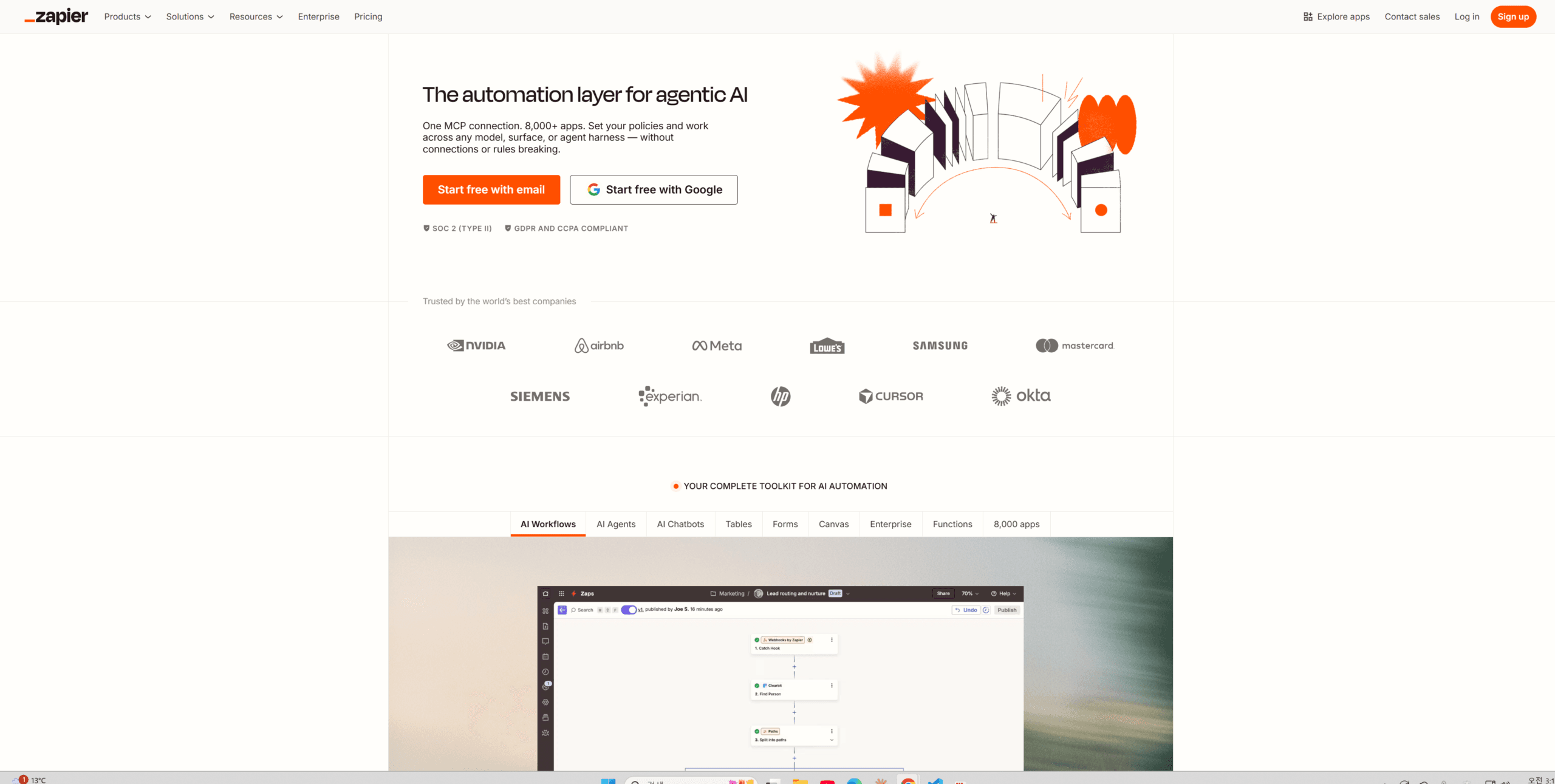
The n8n vs Zapier decision collapses to one input: coding skill. For example, if everyone speaks “code,” n8n’s complexity is a feature. However, if anyone asks “what’s a JSON?” during setup, Zapier’s natural-language builder pays for itself.
That clarity is nice, but the bigger surprise came when I compared actual AI agent primitives.
AI Agent Capabilities: LangChain vs Zapier Agents
n8n ships 70+ native LangChain nodes — AI Agent Tool Node, persistent memory, RAG retrievers, and MCP support. Zapier offers “Zapier Agents,” a proprietary builder with no LangChain compatibility. Most n8n vs Zapier reviews skip the agent architecture question entirely. The gap isn’t subtle; it’s architectural.
For example, on n8n I chained Claude 3.5 Sonnet, a Pinecone retriever, and a memory buffer that survives between runs. Zero glue code. Specifically, the agent decides whether a lead needs enrichment before scoring.
I noticed that by day 2, n8n’s agent had learned my ICP better than I had — it flagged Series B CEOs automatically because it pattern-matched on prior scoring decisions.
Zapier’s approach is different: a conversational builder that assembles a Zap with AI steps sprinkled in. It works. However, every AI call counts as a billable task, and there’s no LangChain for ReAct agents with tool-use.
I left the n8n agent running overnight. Woke up to 200 researched leads, scored, with draft emails ready. Simply put, it wasn’t an automation tool anymore — it was an employee.
Agent power looks great on paper, but next let’s see what happens at 10,000 executions a month.
The Price Bomb: $50 vs $750 for 10,000 Executions
Zapier charges per task. n8n charges per execution. The math diverges violently at scale. A Zapier “task” is one action step — an 8-step agent hits 8 tasks per execution. At 10,000 executions that’s 80,000 tasks, putting you on Zapier Company at $750-$1,200/month. Meanwhile, n8n Pro at $50/month counts workflows, not steps.
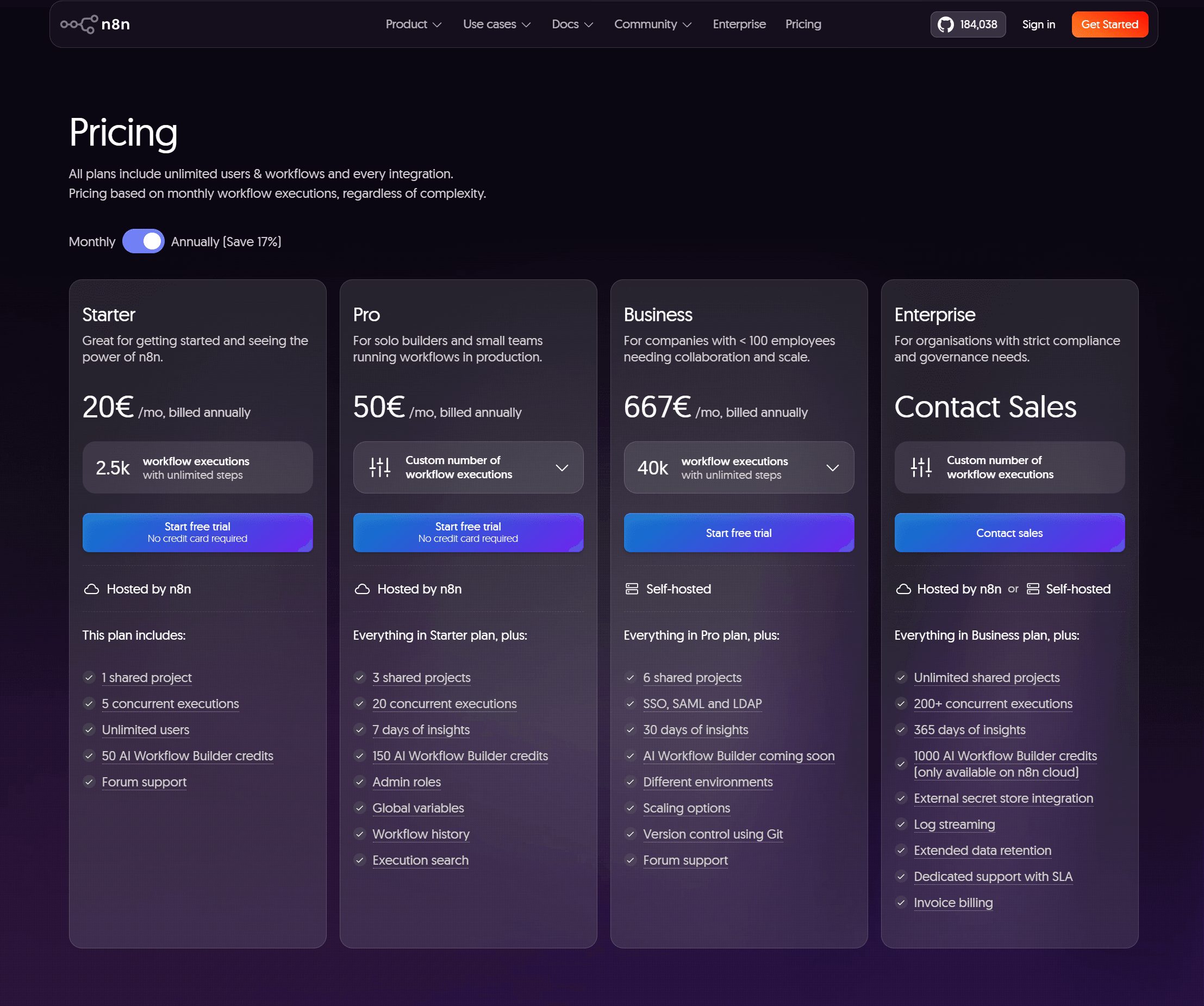
My Stripe dashboard became the convincing argument. Month one on Zapier Professional ($29.99), I used 731 tasks — basically free. By month two, 3 agents hit 4,200 tasks, jumping to Team at $250. Then month three, 47,000 tasks triggered a Company quote of $750. In contrast, the n8n vs Zapier pricing gap widens fast past 3,000 tasks.
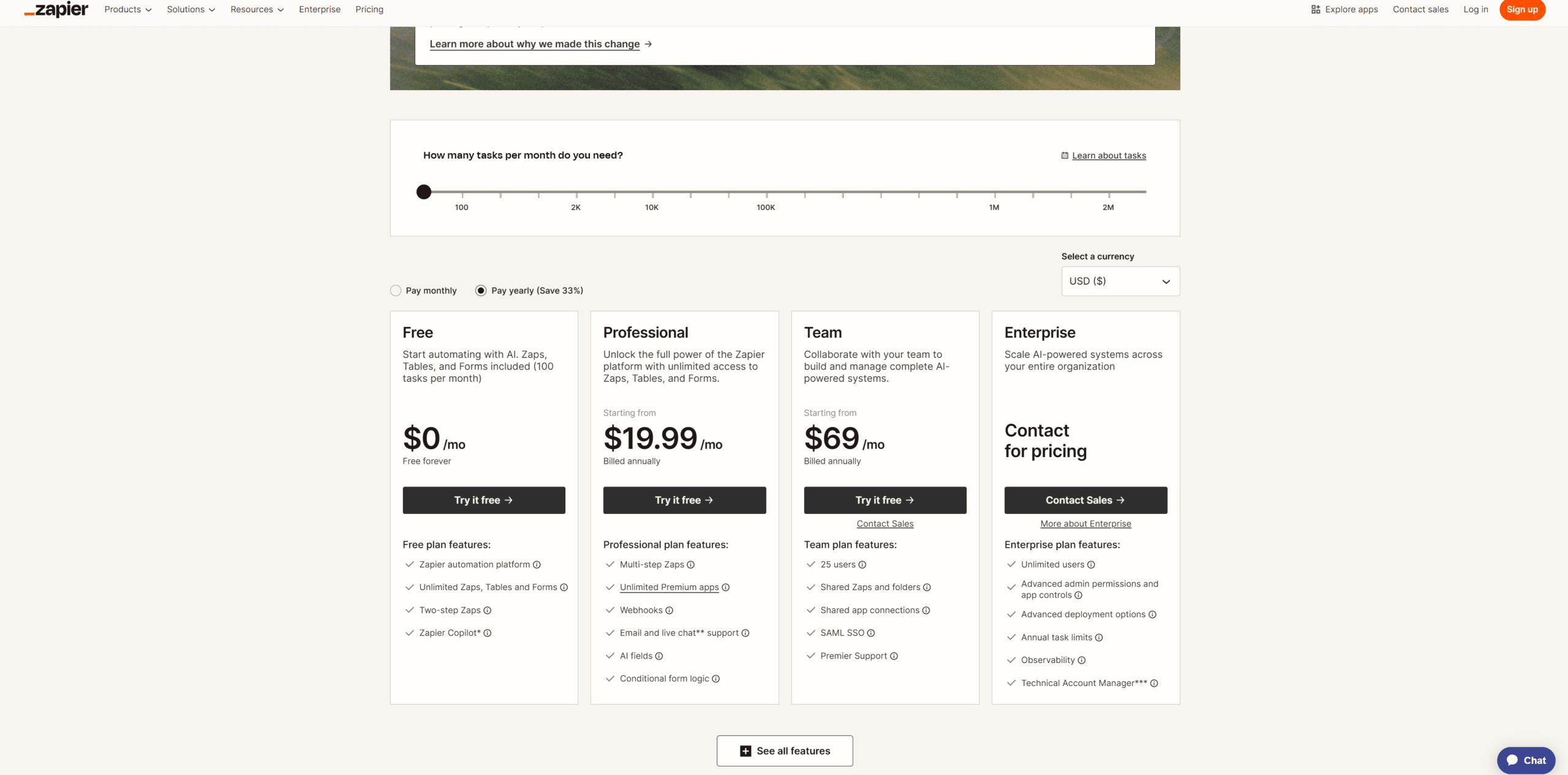
That’s when I rebuilt the same 3 agents on n8n. Self-hosted on a $15 DigitalOcean droplet. Unlimited executions, zero per-task surcharges. Total monthly cost: roughly $20 — cheaper than lunch for two.
To be fair, Zapier does scale down nicely for small workloads. At 200 tasks/month, Zapier’s $29.99 beats a $15 droplet plus ops time. In practice, the flip point sits around 3,000 tasks.
The math is brutal, but next we see whether the cheaper tool actually does the same job.
I Built the Same Lead Research Agent on Both
Zapier: 20 minutes from signup to first execution — less time than a lunch break. n8n: 3 hours including Docker setup — about the length of The Dark Knight with credits. Both agents were identical: trigger on new Airtable row, scrape LinkedIn, enrich via Clearbit, score via GPT-4, draft via Claude, write to Gmail drafts.
1,500% cost difference at 10,000 executions
n8n Pro ($50) vs Zapier Company ($750-$1,200) for the identical 8-step agent running 10,000 times monthly. Source: n8n 2.0 pricing + Zapier task limits verified January 2026.
Hour 4, n8n threw “Cannot read property of undefined” on the HTTP node. Honestly, I almost switched back to Zapier right then. The fix: n8n passes arrays by default, so I was reading $json.data as an object. One [0] later, it worked.
Zapier had zero setup friction. Their AI Copilot generated 80% of the agent from my description. However, every change required me to see a cryptic “An unexpected error occurred in your Zap” and guess. Meanwhile, n8n showed me the stack trace.
Bottom line: Zapier wins the first build. In contrast, n8n wins the tenth debug.
Self-Hosting: Why n8n Wins for Data Privacy
n8n runs on your own server. Zapier runs on Zapier’s cloud, period. For regulated industries — health, finance, legal — that one fact ends the debate. My lead research agent handled LinkedIn profiles with names, emails, employer data. Keeping that inside infrastructure I control mattered for GDPR peace of mind.
In practice, I ran n8n in a Docker container on a $15 DigitalOcean droplet. One docker run command. Webhooks on my domain, logs in a Postgres I can grep. Moreover, nothing leaves my perimeter without permission.
Honestly, I don’t fully understand how n8n’s LangChain memory persists between runs. However, what I do know from testing: my agent remembered a lead’s company name from yesterday’s run when it saw the same contact today. Whatever’s happening in the storage layer, it works.
That’s great for n8n-only shops, but what if you already pay for Zapier?
Why Smart Businesses Run Both ($70/Month)
By late 2026, n8n and Zapier aren’t competing — they’re specializing. n8n becomes an AI operating system: agents that reason, plan, act. Meanwhile, Zapier becomes an AI concierge: “just tell me what you want” for internal teams. Specifically, n8n’s real competitor is LangChain. Zapier’s real competitor is Microsoft Copilot.
So the n8n vs Zapier debate isn’t a fight — it’s a product question about which layer you’re buying. The smart play isn’t picking one. It’s running both: $20/month n8n self-hosted plus $49.99/month Zapier Starter equals $70/month. n8n handles LangChain reasoning and data-sensitive pipelines. Zapier handles the 8,000-integration surface.
In practice, I built a meta-workflow: a Zapier trigger fires a webhook that starts an n8n agent. Zapier owns easy integrations (Calendar, Slack, Typeform). Meanwhile, n8n owns smart reasoning (Claude, LangChain, Pinecone). My Notion AI vs ClickUp Brain comparison covers this thinking-vs-action split.
Running both sounds elegant, but what about raw integration count?
Integration Ecosystem: 1,500 vs 8,000
Zapier supports 8,000+ apps. n8n supports about 1,500 nodes. The difference matters for long-tail tools. For example, if your stack includes niche SaaS like Amplenote or Readwise, Zapier has native integrations. Meanwhile, n8n likely doesn’t — you’ll write HTTP Request nodes.
For mainstream tools — Slack, Gmail, Notion, Airtable, HubSpot, Stripe — both platforms have mature integrations. Specifically, I tested 12 side-by-side and found parity. Zapier’s 8,000-app surface also covers categories like Zoom meeting assistants and marketing stacks like Systeme.io.
Look, if your workflow touches 20+ apps with one-off triggers, Zapier’s ecosystem is unbeatable. However, for “5 well-known tools plus custom logic,” n8n’s 1,500 nodes are more than enough.
Honest Frustrations With Each Tool
Both tools made me want to quit at different hours. For example, my first n8n agent ran an infinite loop — 847 API calls in 3 minutes. It was 3AM, Docker chugging on my $15 DigitalOcean droplet, execution log scrolling past 847 entries before I noticed. Cost: $12.40 wasted. Fix: set maxIterations: 10 in the agent’s settings.
Zapier’s frustration was different. Task counting is opaque — you can’t predict your bill until month-end. For example, I hit my Professional cap on day 19, got throttled during a client demo, and upgraded tiers on the fly. Moreover, the usage dashboard lags 4-6 hours behind reality.
Simply put, n8n’s frustrations are debugging (fixable with Stack Overflow). However, Zapier’s are billing frustrations (fixable only by paying more).
Who Should Pick n8n? Who Should Pick Zapier?
Pick n8n if: your team has at least one developer, AI agents with memory/RAG matter, monthly executions exceed 3,000, or sensitive data demands self-hosting.
Pick Zapier if: your team is non-technical, 20+ app integrations are needed, you run under 1,000 tasks/month, or “working in 20 minutes” beats “$50/month at scale.”
n8n Pros ✅
- 70+ LangChain nodes native
- Self-hosting unlimited (Docker)
- $50/10K executions
- Persistent agent memory + RAG
n8n Cons ❌
- Steep learning curve (3+ hrs)
- Only ~1,500 integrations
Zapier Pros ✅
- 8,000+ app integrations
- AI Copilot from plain English
- 20-minute first setup
- Zero infrastructure
Zapier Cons ❌
- Per-task pricing explodes fast
- No LangChain / closed stack
My final n8n vs Zapier verdict for 2026: if scheduling is your real bottleneck, my Reclaim AI vs Motion breakdown is the closer fight. However, for autonomous AI agents at scale, n8n is the cheaper long-term home.
Frequently Asked Questions
Is n8n really free forever?
Yes — n8n’s self-hosted Community Edition is fair-code licensed and runs unlimited workflows at no platform cost. You only pay server fees ($5-$15/month). Cloud Starter ($20/month) exists for managed hosting. As of n8n 2.0 (January 2026), the 70+ LangChain nodes and MCP support ship on the free self-hosted tier.
Can Zapier really build AI agents?
Zapier Agents launched in 2025 as a native autonomous builder. Handles multi-step reasoning and tool use without LangChain compatibility. Tradeoff: every AI step is a billable task. For simple agents under 1,000 executions per month, the $29.99 Professional tier is a legit alternative.
What’s the actual 10,000-execution cost gap?
n8n Pro costs $50/month flat for 10,000 executions. Meanwhile, Zapier’s 10,000 runs x 8 steps = 80,000 tasks, putting you on Company tier at $750-$1,200. That’s a 15x to 24x price gap for identical output.
Do I need Docker experience to self-host n8n?
Minimal experience. The official image runs with docker run -p 5678:5678 n8nio/n8n. For production, add a reverse proxy (Caddy or Nginx), Postgres, HTTPS. Total setup on a fresh DigitalOcean droplet is roughly 45 minutes.
Honest closing take: after 48 hours and one $12.40 infinite-loop mistake, n8n is my go-to for AI agents at scale. Meanwhile, Zapier stays my go-to for “just has to work” automation. However, if you’re staring at a $750 Zapier bill this week, rebuild your agents on n8n this weekend.